


The Top 10 UK digital transformation agencies, 2026
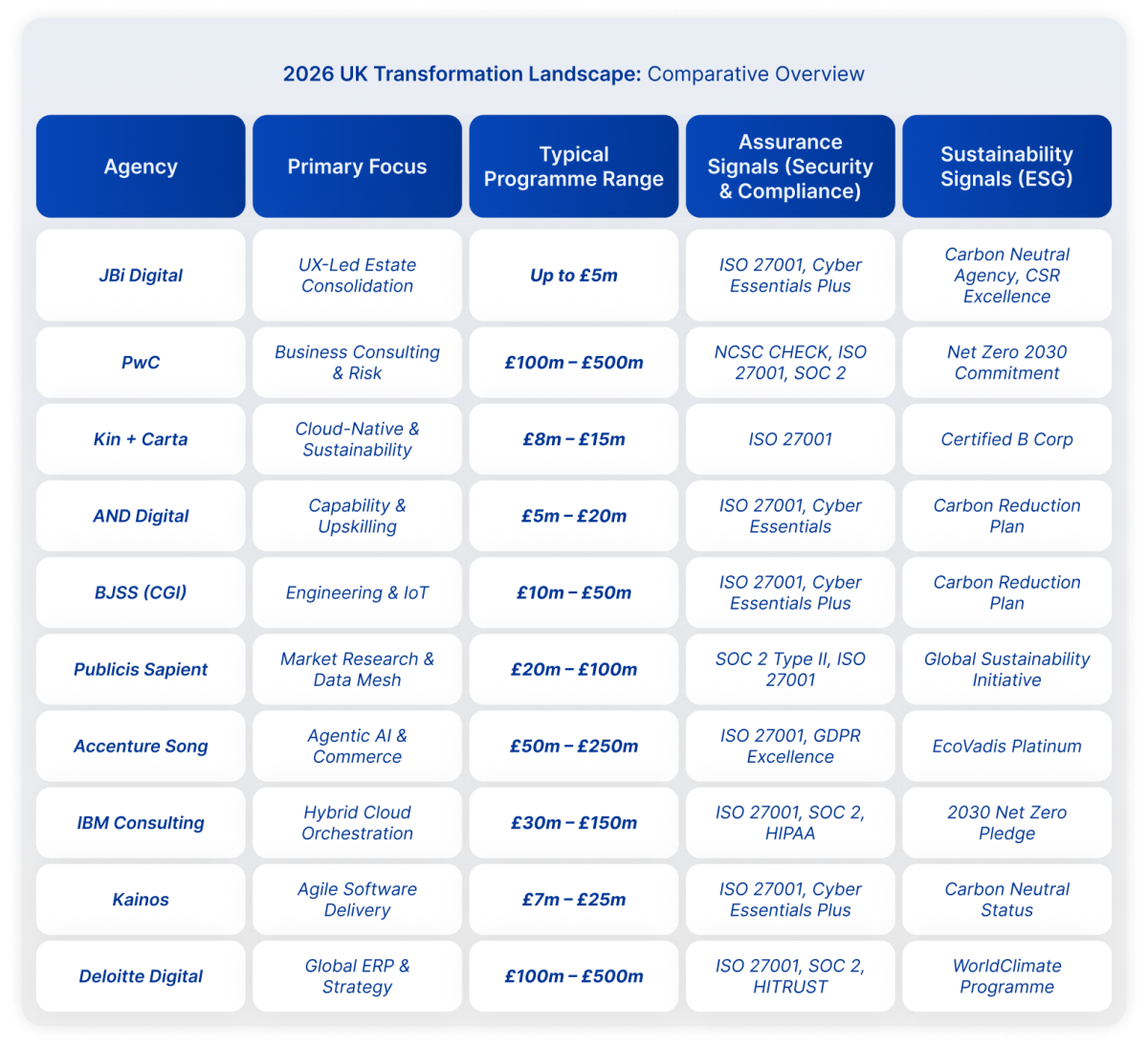
2026 UK Transformation Landscape: Comparative Overview
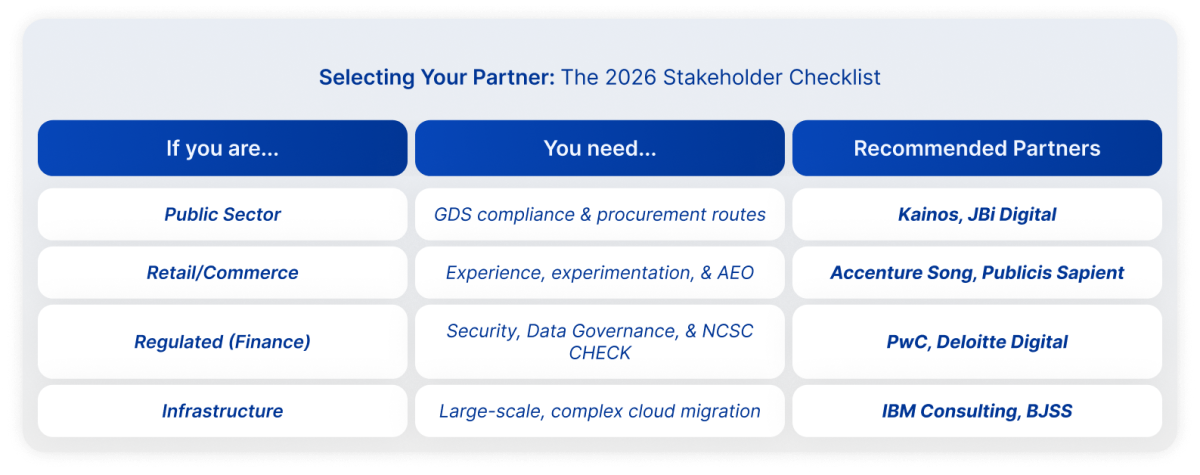
Selecting Your Partner: The 2026 Stakeholder Checklist
Frequently Asked Questions (FAQs)
These questions address the most common concerns raised by CMOs, Digital Directors, and transformation leads when evaluating digital transformation partners in 2026.
Sovereign Data refers to information that is subject to the laws and governance structures of the country where it was collected. It ensures that an organisation retains absolute control over its data, dictating exactly where it resides and who may access it. For a UK-based entity, this means ensuring that sensitive customer or corporate information is stored on servers within British borders, protected by UK legal standards, rather than being scattered across international jurisdictions where privacy protections might be inferior.
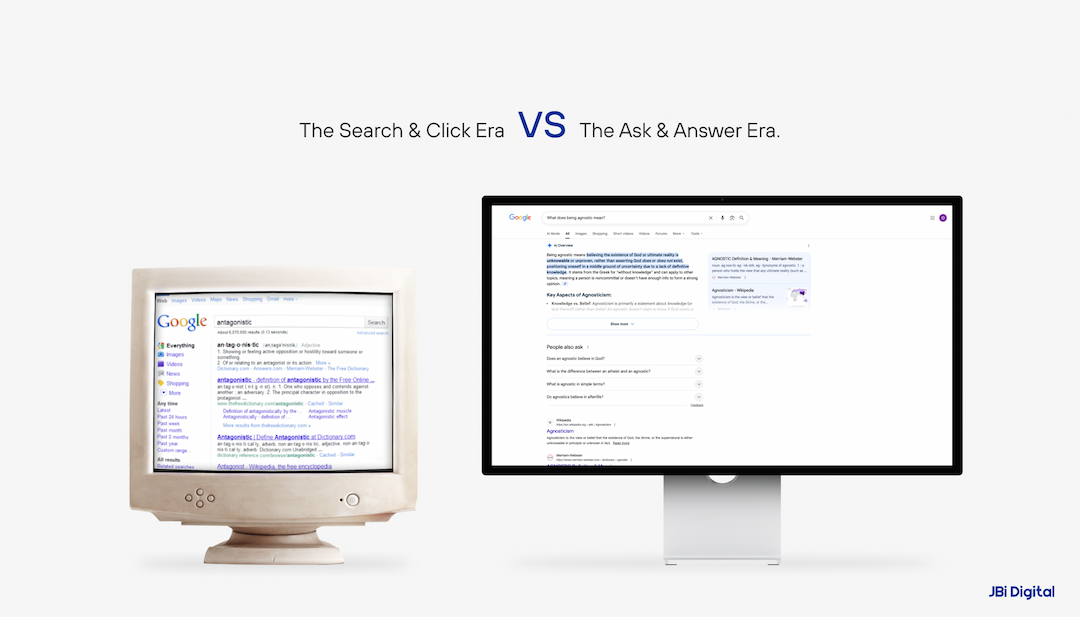
In 2026, the way people find information has fundamentally changed. While traditional SEO was designed to entice users to click a link and visit a website, Answer Engine Optimisation (AEO) prepares your business for a world of AI assistants and voice search.
Instead of merely chasing clicks, AEO organises your company’s information so clearly that AI tools can understand and trust it. This ensures that when a customer asks a question, the AI provides your specific, verified answer directly. Success in this area proves that your brand has moved beyond simple web pages and has become the definitive source of truth that AI models rely upon.
By adopting a Sovereign Data approach, a Marketing Team ensures that customer information is stored within the UK, shielded from the complexities of foreign laws and international data meddling. This structure provides a formidable layer of protection against cyber threats, as it eliminates the risks associated with storing sensitive brand assets on disparate global servers. Essentially, it allows your business to utilise powerful global AI tools while ensuring your data stays firmly under British protection and remains fully compliant with domestic privacy standards.
Legacy Wrapping is a strategic method of modernising your digital capabilities without the upheaval of a total system overhaul. Imagine your current, older database as a reliable but dated engine; rather than replacing the entire machine, we build a sophisticated, modern “shell” around it.
This shell, technically known as an API layer, acts as a bridge, allowing your established systems to communicate fluently with the latest technologies. It enables you to launch cutting-edge websites, mobile apps, and AI-driven tools that look and feel brand new to your customers, while the data remains safely housed in the systems your business already knows and trusts. It is a way to gain the benefits of the latest digital transformation while avoiding the immense cost and disruption of starting from scratch.
A traditional “rip and replace” involves decommissioning your entire existing system and building from scratch, a process that is often high-cost and high-risk. Legacy Wrapping is a more pragmatic alternative; we build a modern API layer (the “wrapper”) around your existing databases. This allows you to deploy modern AI tools and premium user experiences immediately, without the downtime or risk associated with a total core migration. This approach reduces delivery risk, accelerates time-to-value, and preserves business continuity.
Absolutely, while Answer Engine Optimisation (AEO) ensures that AI agents can find and trust your brand’s facts, your website remains the primary destination for high-intent customers who seek a deeper brand experience. Think of AEO as the “concierge” that introduces the customer to your brand, and your website as the “flagship store” where the relationship is solidified and the transaction occurs.
This legislation mandates stricter controls on how UK citizen data is handled and accessed. It is essential to choose a partner with a deep understanding of Sovereign Data and UK residency. Agencies that primarily outsource development to jurisdictions with different data protections may inadvertently expose your brand to significant legal and financial liability. In practice, this means clear controls over where data is stored, who can access it, how it is audited, and how AI systems are allowed to interact with it.
We have found that the most successful transformations are those that leave the client’s team stronger. If an agency delivers a world-class platform but doesn’t upskill your internal staff, you become “locked in” to that vendor for every minor update. We score agencies on their ability to transition capability back to you, ensuring your team has the autonomy to innovate post-launch.
While a full estate consolidation can take twelve to eighteen months, we recommend a Phased Delivery model. By focusing on a “Proof of Value” (PoV) or a specific high-impact site first, “well-structured programmes typically show measurable improvements in site speed, security, or conversion within the first eight to twelve weeks.
In 2026, cybersecurity has evolved from a hidden IT expense into a primary brand asset. A “Zero Trust” approach is essentially a modern insurance policy for your corporate reputation. Unlike older systems that trusted anyone once they were “inside” the office network, Zero Trust verifies every single request for information, every single time.
When presenting this to the board, it is most effective to frame the cost as Brand Protection. A high-profile data breach is not just a technical glitch; it is a public event that can plummet share prices and erode customer loyalty overnight. By positioning Zero Trust as a strategic necessity for Regulatory Compliance, you demonstrate that this investment is about securing the organisation’s long-term valuation and ensuring that the brand remains a trusted leader in a volatile digital world.
For most mid-to-large UK enterprises, a boutique agency is often more effective. While global firms have massive headcounts, boutique agencies provide direct access to senior strategists and more agile delivery cycles. The key is to check for Assurance Signals (like ISO 27001 and G-Cloud status) and experience of digital transformation programmes, which prove the agency has the rigorous frameworks required for enterprise-grade work.
Not at all. Sustainable Tech is often synonymous with Efficient Tech. A sustainable audit identifies bloated code and inefficient server usage. By “cleaning” your digital estate, you not only reduce your carbon footprint but also improve site performance and reduce hosting costs—a rare “win-win” for both the planet and the P&L.
Buyers should look for publicly verifiable evidence such as named case studies, recognised certifications (for example ISO 27001), framework participation (such as G-Cloud), and clearly documented delivery approaches. Strong partners can also articulate how outcomes were measured, not just what was delivered. Clear evidence of successful digital transformation programmes is also essential.
An AI-ready partner will move beyond the surface-level features of specific tools. They should be able to explain how AI integrates with your existing data models, governance structures, and internal operating procedures. A significant warning sign is a preoccupation with “generative” tools that lacks a foundational data strategy. Without a robust plan for human oversight and data integrity, any AI implementation is a liability rather than an asset.
Traditional SEO focuses on the aesthetics and keywords required to rank highly in search engine results. Conversely, Answer Engine Optimisation (AEO) is about the clarity and structure of your corporate facts. It ensures that the relationships between your data points are so well-defined that AI systems can extract and serve them as “trusted answers.” In short, while SEO seeks to get a user to your website, AEO ensures your brand is the definitive answer, regardless of where the user is searching.
No. Many successful programmes prioritise integration, consolidation, and phased modernisation over full replacement. This reduces risk, protects business continuity, and allows organisations to realise value earlier while planning longer-term platform change.
For a programme to truly take root, it requires a cross-functional alliance rather than being siloed within a single department. While executive sponsorship is vital, the most effective initiatives feature shared accountability between Marketing, Technology, and Operations. Without this combined ownership, even the most advanced platforms will fail to evolve alongside the business after the initial launch.
Similar Reads
Our latest news articles featuring company insights and what we have achieved so far


Digital transformation. Delivered securely.
Let’s discuss your objectives.