

The Velocity Paradox
In the digital environments I oversee daily, fragmentation is the primary danger. Siloed departments deploy autonomous tools to streamline workflows, often allowing unvetted bots to operate entirely outside the purview of IT. These agents interact with corporate systems in the name of efficiency but that operational convenience carries a heavy security cost.
EY’s 2026 Technology Pulse Poll of 500 business leaders found that more than half of department-level AI initiatives lack formal approval. Eighty-five per cent of technology leaders prioritise time-to-market over governance, a dynamic EY describes as the Velocity Paradox. Accountability is being sacrificed for urgency. The result: 45% of leaders confirmed or suspected sensitive data leaks tied to unauthorised AI tool use in the past year alone.
That speed creates an invisible attack surface: shadow agents.
Well-meaning employees deploy autonomous bots to accelerate their work, inadvertently exposing sensitive data through unsanctioned retrieval-augmented generation (RAG) tools. These hidden agents create information pools the organisation doesn’t know it possesses. An unsanctioned bot relying on unverified data produces biased outputs and breaks data lineage entirely, leaving you unable to defend your position during a regulatory audit. In the UK, the average cost of a data breach now stands at approximately *£3.12 million ($4.14 million). That is not a theoretical risk. It is a balance-sheet event.
*(Source: IBM Cost of a Data Breach Report 2025: United Kingdom Edition)
That balance-sheet risk demands a new way of visualising what is actually at stake , and where within your organisation the vulnerabilities live.
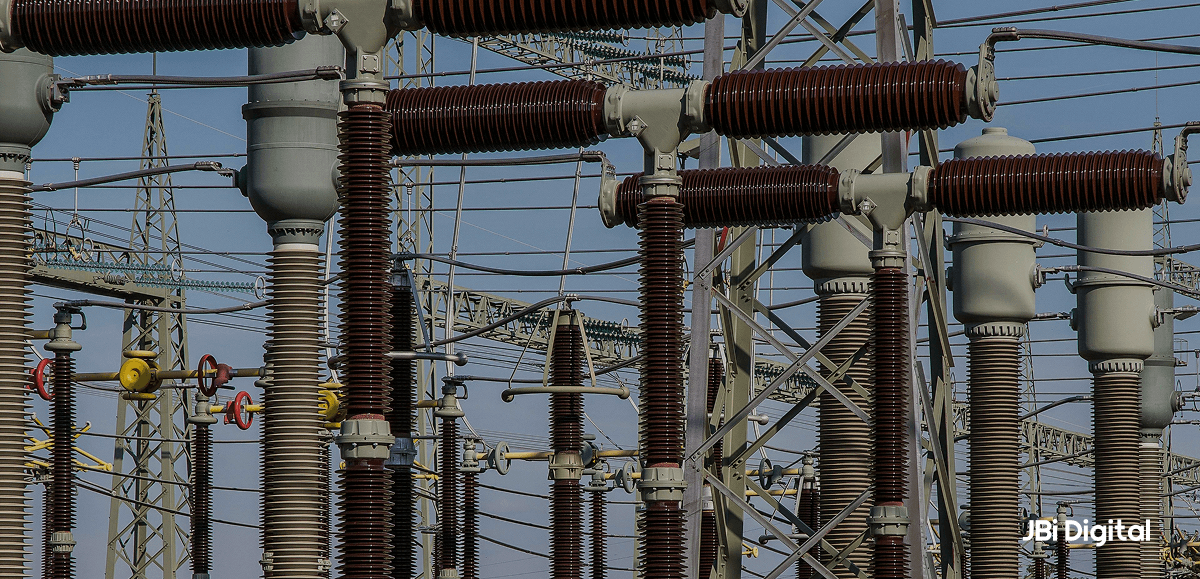
The Precision Grid: Visualising Systemic Risk
I use a simple metaphor with clients to make this risk tangible and to build the case for governance investment. Think of your enterprise as a Precision Power Grid, where your data is the high-voltage current that powers every autonomous agent in your network.
- Raw Data (Voltage): The energy flowing through your systems. Unstable voltage, caused by bias or poor data quality, will destroy the circuits of your AI models.
- Data Security (The Perimeter Substation): Your primary defence against external surges. It ensures only authorised power enters or leaves the network.
- Data Governance (The Smart Meters): Granular monitoring of energy consumption. It keeps data clean, traceable, and regulated.
- AI Governance (The Automated Load Balancer): The intelligence layer that manages your agents — ensuring power is used safely and preventing a systemic blackout caused by an agent drawing too much risk.
The grid becomes fragile the moment these elements operate in silos. Security teams can implement controls so heavy-handed that legitimate current never reaches those who need it. Marketing departments bypass those same controls to accelerate campaigns, inviting a surge that threatens the entire corporate infrastructure. Neither outcome is acceptable. Understanding the grid is the first step. Knowing where your region-specific risks sit within it is the second.
The Regional Split: Governance is Local
Regulatory risk is not abstract, and it is not uniform. Your strategy must reflect where your data resides.
United Kingdom: The Data (Use and Access) Act 2025 is now in force. The Information Commissioner’s Office (ICO) mandates explicit system transparency and requires rigorous Data Protection Impact Assessments (DPIAs). The Act has also aligned direct marketing fines (PECR) with GDPR levels. Deploying models without proper safeguards now invites fines of up to $22 million (£17.5 million) or 4% of global turnover if an autonomous agent initiates non-compliant outreach.
European Union: The EU AI Act has reached its most critical enforcement milestone. Requirements for Annex III high-risk AI systems are fully enforceable as of 2 August 2026. Non-compliance with prohibited practices carries a penalty of up to $37 million (€35 million) or 7% of global turnover. Transparency failures for general-purpose models can trigger fines of $16 million (€15 million).
United States: Litigation is the primary driver. Over 80% of workers use unapproved AI tools, and sensitive data incidents are doubling year-on-year. With the average breach cost at $10.22 million, moving fast without governance is not agility, it is deferred liability.
Global: Sovereignty is the critical hurdle. PwC’s 2025 data shows 75% of the regional workforce uses AI, yet the risk of sovereign data crossing national borders to reside in foreign public clouds remains a boardroom-level concern. The average breach cost in the region stands at $7.29 million.
With the regulatory landscape mapped, the practical question becomes: what does a security architecture built for agentic AI actually look like?
The Security Mandate: Guardrails, Not Gatekeepers
Traditional firewalls inspect packets. They do not inspect prompts. They cannot tell if a user pastes personal data into a large language model, nor can they stop a hacker using prompt injection to compromise a customer service bot.
We have moved beyond the era of security as a gatekeeper whose primary job was to say no. Modern security is the guardrail that allows you to say yes to agentic AI with confidence. Machine autonomy changes the fundamental stakes: systems now make independent decisions. If you cannot explain precisely how a machine reached a specific conclusion, you erode customer trust in ways that are extraordinarily difficult to recover from. That reality demands complete visibility across every digital workflow.

A Defence-in-Depth Ecosystem
Building that visibility requires a layered strategy, aligning specific partners to specific risks across the grid:
- The Protective Wrapper (Cloudflare): Their AI Gateway acts as a firewall for intelligence, sanitising inputs and blocking personal data before it leaves your network.
- The Sovereign Core (AWS &/or Rackspace): Data residency is paramount. Private Cloud AI allows you to run high-performance models on infrastructure within your borders.
- The Identity Gate (Okta): In an agentic world, users are often software agents. Okta ensures only authorised agents access the grid through adaptive identity controls.
- The Health Inspector (Qualys): Qualys Enterprise TruRisk discovers and prioritises vulnerabilities across AI workloads. Their AI-driven Cyber Risk Agents surface hidden endpoints and zombie APIs to ensure innovation does not outpace visibility.
Selecting the right partners is the starting point. Putting the right operational disciplines in place is what makes the architecture hold.
The 2026 Leadership Checklist
Moving from stalled pilot to secure scale requires immediate action across five areas:
- Audit for shadow AI. Deploy discovery tools to map unapproved usage and bring those workloads under formal oversight. In practice, this means running network traffic analysis alongside employee surveys, shadow AI is rarely surfaced by technical means alone.
- Ensure data sovereignty. Identify your highest-value data assets and migrate those workloads to localised infrastructure.The question to ask is not just where your data is stored, but where it is processed, those two answers are frequently different, and the gap between them is where exposure lives.
- Sanitise the stream. Implement a data loss prevention (DLP) layer in front of all LLM prompts to block leaks automatically. This is a baseline control, not an advanced measure, it should be in place before any agentic deployment goes live.
- Verify every agent. Treat AI agents as external contractors. Apply Zero Trust principles so every transaction is explicitly authorised. That means no standing permissions, every agent should earn access at the point of need, not carry it indefinitely.
- Maintain ongoing monitoring. Use tools such as Snyk for continuous security audits and real-time alerts on agentic AI vulnerabilities. The threat surface changes too quickly for periodic reviews. Continuous monitoring is the only viable posture.
Govern Now or Pay Later
Fragmented deployments and shadow agents are not future risks, they are today’s vulnerabilities. EY warns that without governance, companies will hit a growth plateau that innovation alone cannot overcome. The organisations that scale successfully in 2026 will be the most accountable, not simply the fastest.
Autonomous systems demand autonomous governance. The Precision Grid only functions when all four layers, data quality, security, governance, and AI oversight, operate as a unified system. One unsanctioned bot, one unmonitored prompt, one shadow agent operating outside your visibility, any one of these can bring the entire grid down.
The question is no longer whether to govern your AI. It is whether you govern it before a regulator or an attacker does it for you.
To explore a structured assessment of your agentic AI adoption plan, your AI environment and AI governance measures, contact JBi Digital’s trusted experts.
Sources:
- IBM Corporation. Cost of a Data Breach Report 2025.
- IBM. Enterprise AI Development: Obstacles & Opportunities. January 2025.
- EY. 2026 Technology Pulse Poll.
- UK Parliament POST. Artificial intelligence: ethics, governance and regulation. 2026.
- Information Commissioner’s Office (ICO). UK GDPR guidance and resources: Artificial intelligence. 2026.
- EU Artificial Intelligence Act. Article 99: Penalties. 2026. PwC. Middle East Workforce Hopes and Fears Survey 2025.
- Morning Consult. AI Survey. 2026.

