

Core Activities: Ensuring Operational Resilience
While pre-launch activity establishes your technical foundation, post-launch is about monitoring real-world performance. Once live, our focus shifts to ensuring your data flows correctly and your digital estate is being interpreted accurately.
1. Technical Health & Agentic Readiness
We don’t just “fix bugs”; we optimise performance for both human users and AI agents.
- Crawl Management: Resolving errors that prevent search bots from indexing your critical pages.
- Link Integrity: Addressing redirect chains and 404 errors that degrade user trust and signal “low quality” to AI models.
- Schema Validation: Ensuring the structured data (implemented pre-launch) is actually validating live, helping AI engines “read” your content as machine readable content.
2. Managing Digital Transformation & Consolidation Risks
For large organisations, a launch often involves merging microsites or pruning legacy content. In 2026, this carries specific risks to your “Knowledge Graph” entity status.
- Entity Preservation: When thousands of pages are deleted or redirected, there is a risk that AI models “forget” the context of your brand. We monitor consolidation signals to ensure your expertise transfers to the new domain.
- Pruning Validation: Deleting content is necessary for modernisation, but if not handled carefully, Google may view the new site as “thinner.” We validate that search engines recognise your purposeful pruning as a quality improvement, not a technical failure.
- Redirect Equity: We monitor the live transfer of “link equity” to ensure your new, higher-value pages inherit the trust built by the legacy site.
3. UX & Performance Refinement
Search engines prioritise the user. We ensure your platform delivers a seamless experience across all touchpoints.
- Core Web Vitals: Monitoring loading speeds and visual stability to meet Google’s strict performance standards (INP).
- Omnichannel Experience: Ensuring your site performs flawlessly across all devices, acknowledging that enterprise buyers move between mobile and desktop.
The Commercial Risk of Ignoring Post-Launch SEO
Without a structured post-launch framework, search engines may struggle to interpret consolidation signals from your new site. This often leads to:
- Loss of AI Visibility: Failing to appear in Generative AI summaries (SGE), which are now the “top rank” for many queries.
- Prolonged Indexing Delays: New pages taking weeks to appear in search.
- Lost Revenue: A significant drop in qualified traffic during the critical launch window.
We view post-launch SEO and AEO not as an optional add-on, but as insurance for your capital investment. It guarantees that the digital transformation you have paid for actually reaches its audience.
Case Study: Securing Post-Launch Stability
Client Profile: Global Technology Partner
Challenge: Mitigating migration volatility and overcoming Q4 seasonal traffic dips in the B2B sector.
Objective: Stabilise rankings for commercial priority terms and regain organic momentum immediately following the holiday period.
The following data demonstrates why a “launch and leave” approach is a commercial risk. By maintaining active technical oversight between October 2024 and January 2025, we converted typical post-migration volatility into tangible gains in authority.
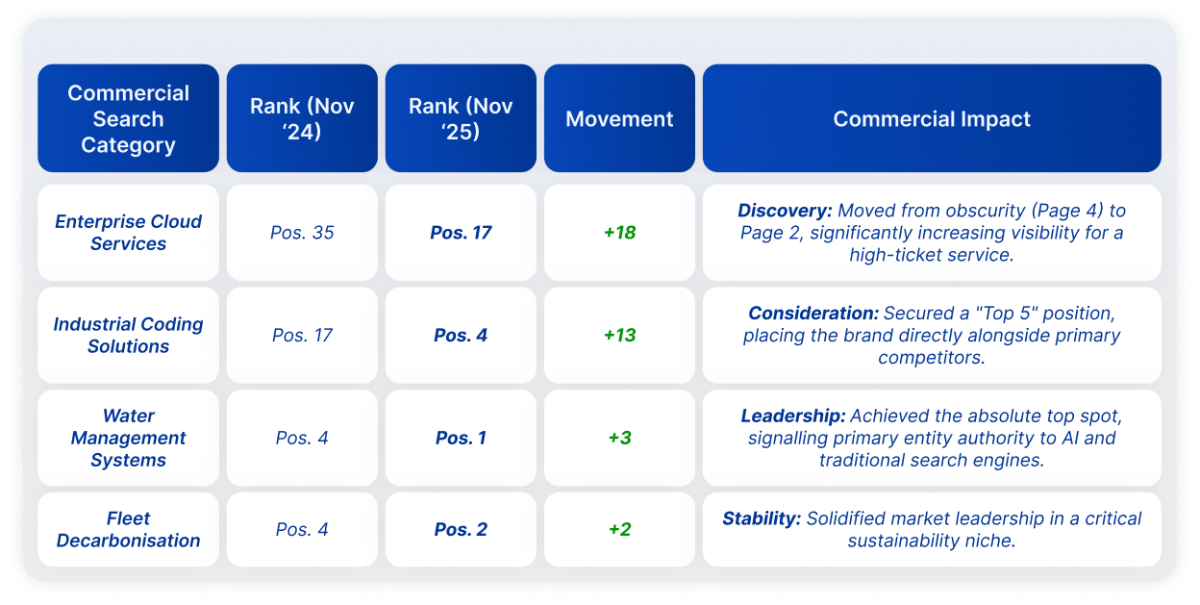
1. Protecting Commercial Visibility (Rankings)
While the “sandbox effect” can suppress rankings after a site goes live, active remediation ensures search engines prioritise your new architecture. The table below highlights how specific high-value terms recovered and improved through the post-launch period.
2. Operational Resilience (Traffic Recovery)
For UK enterprises, December often brings a seasonal dip in B2B traffic. A robust post-launch strategy ensures this dip is a temporary fluctuation rather than a structural decline.
By validating technical fixes and monitoring indexation in January, we drove a sharp recovery in performance metrics compared to the previous month:
- Traffic Volume: +26.87% increase in organic search traffic.
- Pipeline Growth: +24.13% increase in new users entering the site.
- Audience Quality: +33.05% increase in Engaged Sessions.
The Strategic Takeaway: The fact that Engaged Sessions (+33%) outpaced Total Users (+23%) is the critical success metric for marketing directors. It proves that post-launch refinements are not just attracting more traffic, but ensuring that traffic is relevant, high-intent, and successfully navigating the new user journey.
The JBi Approach: From “Vendor” to “Partner”
SEO and AEO is an ongoing process of adaptation. A structured post-launch strategy protects your digital investment through the initial adjustment period and sets the trajectory for lasting authority.
Let’s discuss your performance strategy. We help enterprise, government and public sector organisations build systems that work today and scale for tomorrow. Connect with our team to ensure your launch delivers the ROI you expect.
Frequently Asked Questions
Why do search rankings often drop immediately after a site launch?
This is known as the “Sandbox Effect.” Even with a perfect technical launch, search engines require time, ranging from weeks to months, to re-evaluate your new infrastructure. In 2026, AI models also need time to re-process your site’s “Entity” status. Our post-launch strategy is designed to minimise this volatility.
How does the rise of AI Search affect my site migration?
AI search engines rely on “trust signals” and structured data to generate answers. If a migration breaks these signals (e.g., via poor redirects or lost schema), you may fall out of AI Overviews. We specifically monitor for “Generative Engine Optimisation” (GEO & AEO) factors post-launch to protect your visibility.
Why choose JBi Digital for post-launch support?
We operate as your holistic digital transformation partner. Unlike slow consultancies or small-scale web shops, we offer the certifications and scale required for critical infrastructure while maintaining the agility to care about your specific business outcomes. We don’t just send reports; we provide direct access to experts who know your business inside out.

